

As industrial product design shifts toward higher reliability, faster assembly, and long-term maintainability, the use of self tapping inserts has become a critical element in achieving engineering excellence. The Thread Insert offer practical solutions to common challenges such as thread stripping, vibration loosening, and structural failure in soft materials. This article explores how self tapping inserts are enhancing product reliability and becoming indispensable in modern mechanical design.
Advancements in Insert Design for Higher Reliability
Modern manufacturers are continuously improving the design and performance of self tapping inserts. Some notable advancements include:
Enhanced Cutting Geometry: Inserts with optimized cutting flutes reduce installation torque and minimize stress on the host material.
Integrated Flanges and Barbs: These features provide better pull-out resistance and load distribution, reducing the likelihood of insert failure.
Pre-applied Lubricants or Coatings: Some inserts come with built-in dry film lubricants to ensure smooth installation and reduce wear on installation tools.
These innovations directly translate into more reliable product assemblies and longer lifecycle performance.
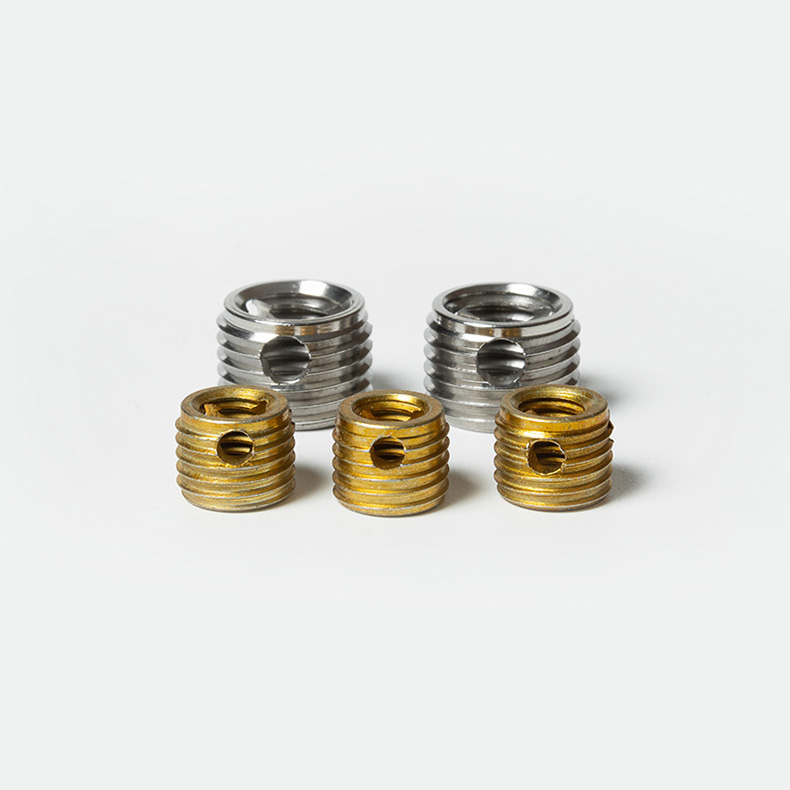
Key Factors for Reliable Application
To fully leverage the benefits of self tapping inserts, engineers and technicians must consider several critical factors:
Proper Hole Preparation: The hole must be correctly sized and clean to ensure proper engagement.
Insertion Method: Depending on the insert type, installation may require torque-controlled tools to prevent over-driving or under-driving.
Insert Material Selection: Use corrosion-resistant materials in humid or chemically aggressive environments.
Thread Engagement: Ensure the screw length and depth of engagement are sufficient to prevent pullout or thread stripping under load.
307 Bore Type Thread Insert and Industry 4.0
With the rise of Industry 4.0 and smart manufacturing, self tapping insert usage is also evolving. Some forward-thinking manufacturers are:
Automating Insert Installation with robotic arms or programmable tools that ensure consistency and speed.
Monitoring Fastener Integrity via digital torque feedback systems.
Using Simulation Software to model insert performance under real-world stress conditions before production.
These approaches further boost product reliability while increasing efficiency and traceability in manufacturing.
The adoption of self tapping inserts reflects a broader shift in industrial design toward reliability, maintainability, and performance under stress. Whether in a smartphone or a wind turbine, the humble insert plays a quiet but crucial role in product success. As engineering standards rise, so too will the demand for these high-performance, self-reliant components.