

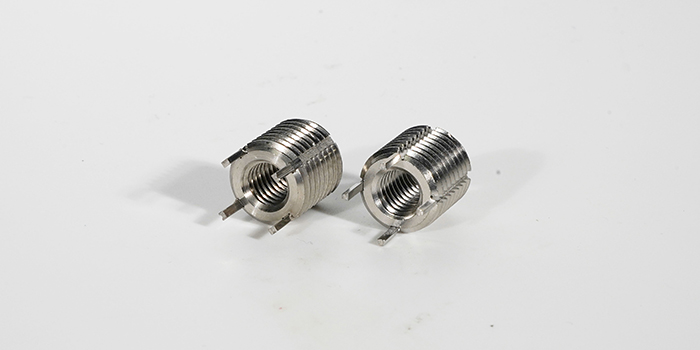
The manufacturing sector has seen rapid advancements in precision engineering, and the Keylocking Insert industry is no exception. Companies are now introducing innovative designs, new materials, and automated production techniques to improve performance and meet rising global demand.
Precision Engineering and Materials
Traditionally, key-locking threaded inserts were made from stainless steel or carbon steel. Today, manufacturers are developing specialized variants made from heat-resistant alloys and lightweight materials to serve industries like aerospace, medical devices, and electronics.
Automation and Smart Manufacturing
Modern production facilities are adopting CNC machining and automated quality inspection systems. This ensures that each self-locking insert meets stringent dimensional accuracy and tolerance requirements. Such precision is vital for industries where a single thread failure can lead to catastrophic consequences.
Surface Treatments and Coatings
To enhance corrosion resistance and wear life, manufacturers are applying advanced surface coatings such as zinc plating, passivation, and dry-film lubricants. These coatings make industrial fastener solutions suitable for harsh environments, including marine and offshore applications.
Customization and Innovation
Customers are increasingly requesting heavy-duty thread repair inserts with custom dimensions, locking features, and material grades. Manufacturers are responding with flexible production lines that allow small-batch customization alongside mass production.
Future Outlook
As technology continues to evolve, the Keylocking Insert market will benefit from smarter production methods, eco-friendly materials, and improved performance characteristics.