

In the aerospace industry, where every gram of weight and every inch of performance matter, reliability is not optional—it’s a mandate. From commercial airliners cruising at 35,000 feet to military jets enduring extreme maneuvers, structural integrity and secure fastening are paramount. Even the smallest components, such as wire thread insert, play a critical role in ensuring that aircraft meet stringent safety standards while optimizing weight, strength, and durability.
This article explores the indispensable function of Metal Wire Thread Insert in aerospace applications, focusing on their performance in high-stress environments, their role in material selection and weight optimization, and how they contribute to aircraft safety, longevity, and compliance with international aerospace standards.
To meet these challenges, aerospace engineers often use lightweight materials such as aluminum alloys, titanium, and carbon fiber composites. However, these materials tend to have poor thread-bearing strength, making them prone to thread stripping, galling, or vibration-induced loosening.
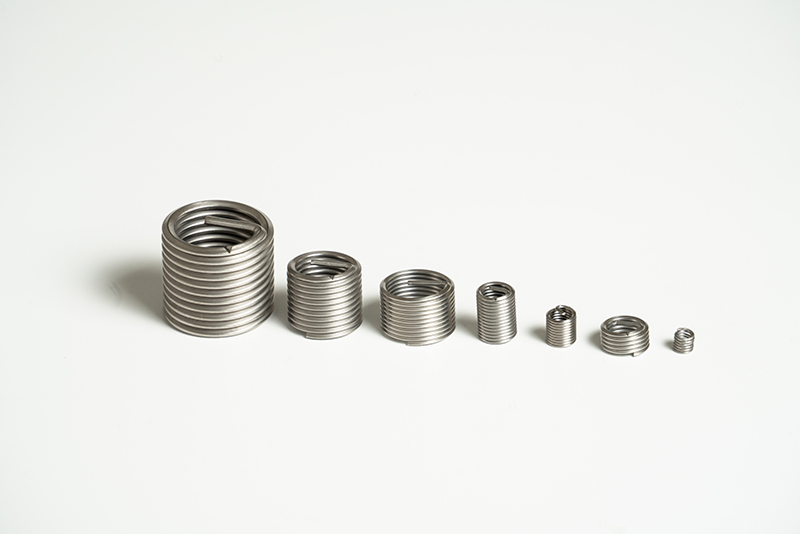
That’s where wire thread inserts offer a strategic solution.
Why Wire Thread Inserts Are Critical in Aerospace
Wire thread inserts, especially those made from stainless steel, Inconel, or titanium, enhance the reliability of threaded joints in aircraft components. These helically coiled inserts are installed into tapped holes to provide a hard, wear-resistant internal thread, significantly improving:
Thread strength
Resistance to vibration and fatigue
Corrosion protection
Ease of maintenance
Thermal performance under extreme temperatures
By allowing the use of strong steel threads within lightweight substrates, they strike a balance between strength and weight — a holy grail in aerospace design.
Future Trends and Aerospace Innovations
Smart Inserts with RFID Tags: Enables tracking of installation data, location, and torque levels for critical assemblies.
Advanced Coatings: For further improving corrosion resistance in marine and polar flight conditions.
Nano-treated Wire Coils: Offer higher strength-to-weight ratios, ideal for next-generation electric aircraft.
3D-Printed Components Integration: Custom thread insert designs are now being optimized for use in additively manufactured aerospace parts.
Conclusion
In the vast and complex aerospace ecosystem, where performance is measured in microseconds and microns, wire thread inserts are silent enablers of reliability. From withstanding brutal G-forces to surviving sub-zero temperatures and engine heat, these tiny components ensure that every thread holds, every time.
As aerospace technology pushes boundaries—from hypersonic jets to Mars-bound spacecraft—the precision, durability, and efficiency of wire thread inserts will remain mission-critical. Their contribution to safety, maintainability, and innovation cements their role as a fundamental part of modern aerospace engineering.